Planning5 min read
Meal planning with kids: one menu for the whole family, picky eaters included
Meal planning with kids works best when the kids' plan is the family's plan. How to start from what they already eat, bring in new foods without a standoff, plan school lunches alongside dinners, and let them choose, with an example week.
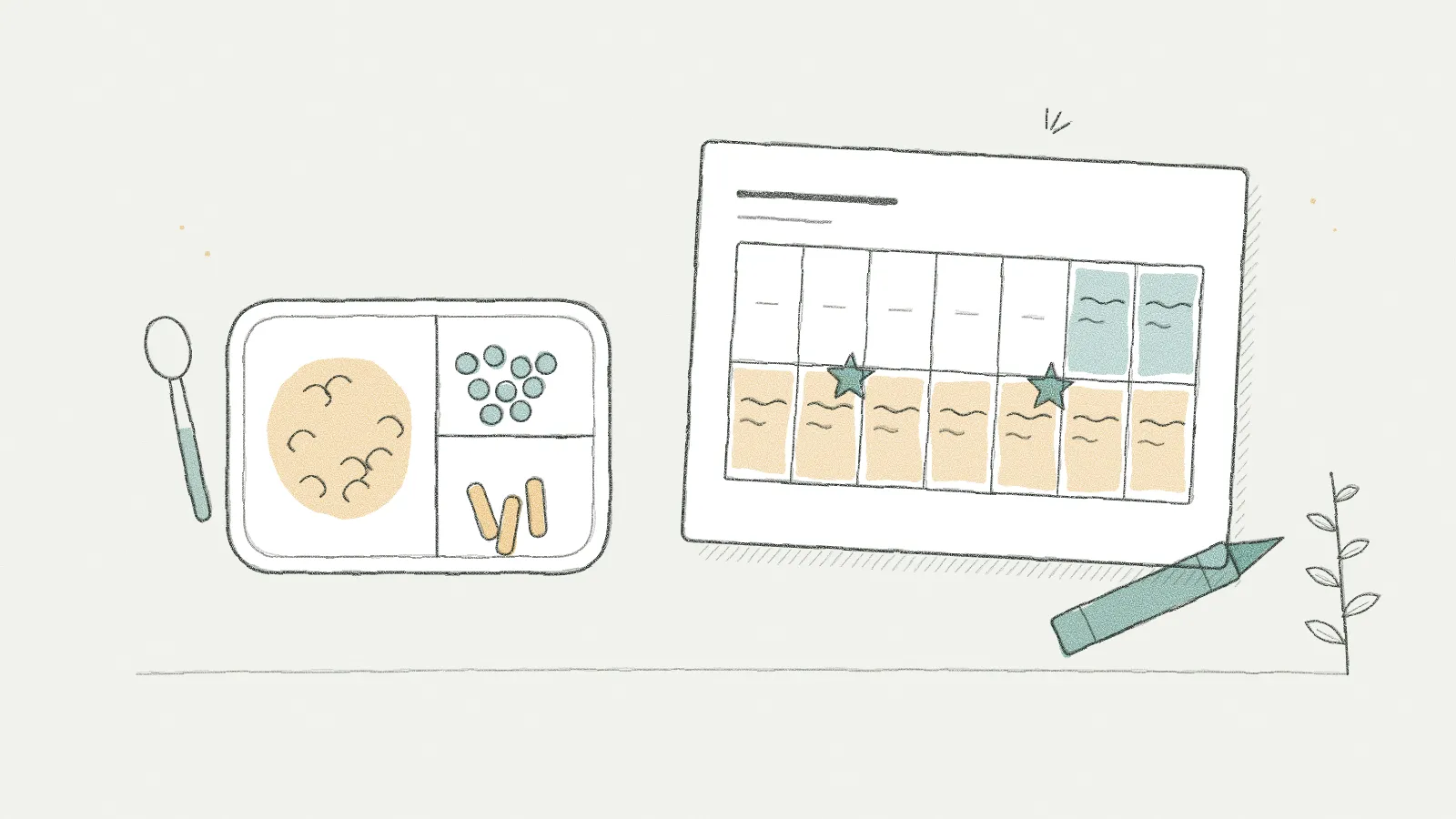
The usual advice for families with young children is a separate kids’ menu: the things they “will eat” for them, real food for the adults. It’s the quickest way to cook two dinners every night. Meal planning with kids works better as one plan for the whole family: start from the dishes they already accept, add one new food at a time next to a familiar one, plan lunches and dinners together, and let each child choose one dinner a week.
You don’t need them to eat everything this week, or a perfect plan. You need a week that’s varied as a whole, nobody cooking a second meal at eight o’clock, and children who know what’s for dinner before they ask.
Plan one menu for the whole family
The NHS’s advice on fussy eaters is to give your child the same food as the rest of the family, and to eat with them as often as you can, because the best way for them to learn to enjoy new foods is to copy you. A weekly meal plan for kids is the family’s plan, with small adjustments.
In practice, that means dishes that work for everyone with a tweak: the chilli flakes on the table, the dressing on the side, the fish flaked for the youngest. If a dish only works for the adults, save it for a night the kids eat out.
Start from the dishes they already eat
Write down what your children eat without a fight, even if the list looks short: pasta with tomato sauce, fish fingers, chicken wraps, jacket potatoes with beans, cottage pie. That list is the base of the week, just as in the routine for planning a weekly menu as a family, and picking from it is far quicker than hunting for “kid-friendly recipes”.
Note the format, not just the dish. The NHS points out that a child who refuses cooked carrots might enjoy them raw and grated. Write both versions down: they’re two different dishes for the plan, even with the same ingredients.
Add new foods one at a time, next to a safe one
One new dish a week is plenty. Put it on the calmest evening, never the night of swimming lessons, and serve it with something they already eat: the unfamiliar fish with the usual potatoes. If they refuse it, take it away without a fuss and plan it again in a few weeks. The NHS notes that it may take lots of attempts before a child accepts some foods, and that tastes change.
The same page suggests thinking about what a child eats over a week, not in a day. That’s what a plan lets you see: a thin Wednesday dinner doesn’t matter if the week has fish, beans, fruit and vegetables in it.
Plan lunchboxes and dinners together
School lunches are half of the weekday food, so plan them in the same sitting. If your school publishes its lunch menu, plan dinners around it: fish at school, something else at home. If they take a packed lunch, plan it from the dinners: cook extra chicken on Tuesday and it’s Wednesday’s wrap.
This is where most of the morning stress goes. A lunchbox decided on Sunday is a lunchbox you don’t invent at 7:40 with one shoe on.
An example week with two kids at school
A family with two children, school lunch most weekdays, one packed lunch, and both meals at home at the weekend.
A weekly meal plan for kids: dinners plan around what they eat at school.
| Day | Lunch | Dinner |
|---|---|---|
| Monday | School: cottage pie | Baked salmon, rice and peas |
| Tuesday | School: tomato pasta | Chicken fajitas, a double batch (their pick) |
| Wednesday | Lunchbox: Tuesday’s chicken in a wrap, carrot sticks | Lentil and vegetable soup with bread |
| Thursday | School: roast chicken and potatoes | Three-bean chilli with rice |
| Friday | School: fish and chips | Homemade pizza (their pick) |
| Saturday | Jacket potatoes with beans | Improvise with what’s left |
| Sunday | Roast chicken with vegetables | Soup and cheese toasties |
Notice what isn’t there: no separate kids’ menu, no day with the same thing at lunch and dinner, and only one new dish, Monday’s salmon, next to rice and peas they already know.
Let each child pick one dinner a week
A dinner they chose is a dinner they’ve already agreed to. Give each one a dinner a week, picked from the family’s list of dishes, not from anything they can think of. With two kids, that’s two dinners out of seven settled without an argument.
What to leave out
- A separate kids’ menu. It doubles the cooking and teaches them there’s another option if they complain.
- Three new dishes in one week. If they refuse all three, the week turns into a negotiation.
- Pudding as a reward. The NHS advises against using food as a reward: children may start to think of sweets as nice and vegetables as nasty.
You decide what’s served; they decide how much
The NHS’s advice is small portions, praise for eating even a little, and no forcing. A good weekly meal plan for kids doesn’t get them to clear the plate. It gets the variety decided before anyone sits down, so dinner stops being a negotiation every night.
Doing it with Wenu
Wenu fits this routine, though it won’t suggest kids’ recipes: it plans with the dishes you already cook. Your dish library keeps them with their ingredients and category, so finding the fish or the legumes to spread across the week is quick, and you can sort by the ones you haven’t planned for longest. Each meal takes a starter, a main and a side: the new dish as the main, the usual side next to it. Free costs nothing: the household is its owner’s, keeps up to 50 dishes, and emails them the week’s menu.
If the kids have lunch at school, Pro lets you switch lunch on only for Saturday and Sunday; on Free, mark the weekday lunches “Eating out”. Pro also puts everyone at home on the same menu, live, fills the shopping list with the ingredients of what you plan, and Ideas shows the dishes you’ve never planned: the new one you’ve been putting off for three weeks.
Keep reading
Planning7 min read
How to make a grocery list from your meal plan, step by step
Learn to turn your meal plan into a weekly grocery list, dish by dish, sorted by aisle and minus what's already at home. With an example and a checklist.
Read article →
Planning5 min read
A budget meal plan for a family: how to eat well for less
Learn to build a cheap weekly meal plan for your family around beans, eggs, tinned fish and planned leftovers, with one shop and an example week for four.
Read article →
Planning5 min read
What is batch cooking, and how to start cooking for the whole week
Learn what batch cooking is, which dishes are worth cooking in bulk, how long they keep in the fridge, and how to plan your first Sunday session.
Read article →