Planning5 min read
What is batch cooking, and how to start cooking for the whole week
Batch cooking means cooking the base of several days' meals in one session and storing it in portions. Here's how it differs from cooking every day, what keeps well, who it suits, and how to start without losing your whole Sunday to the kitchen.
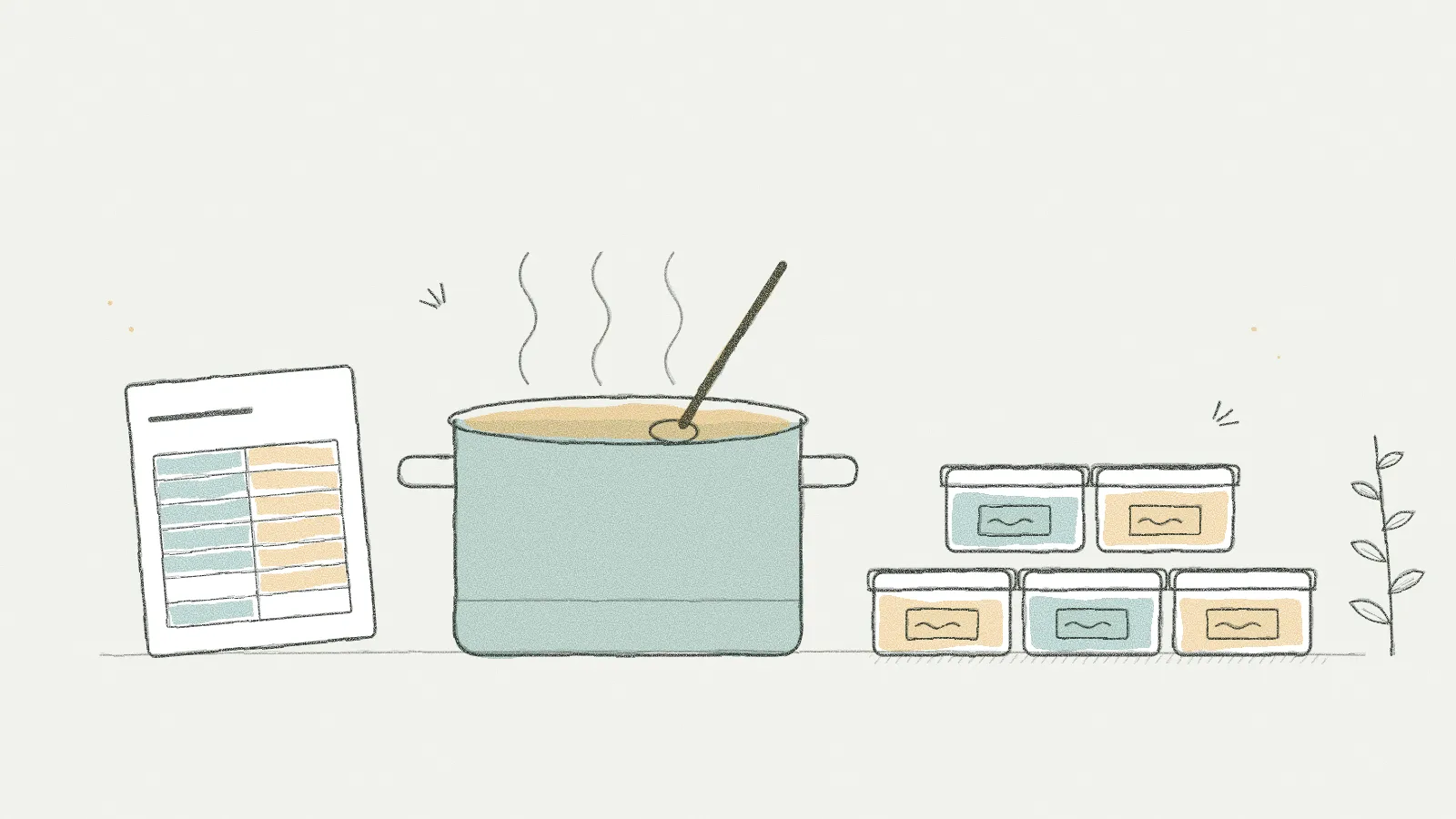
Batch cooking is cooking several dishes, or the parts of them that take longest, in one session, usually at the weekend, so you can eat from them over the following days. The food is split into portions: the fridge holds the first couple of days, the freezer the rest, and on weeknights you only reheat, assemble or finish something quick.
It doesn’t mean eating the same thing five days running, or spending all Sunday at the stove. It means trading lots of rushed half-hours in the kitchen for one long, calm one, and getting home on Wednesday knowing dinner already exists. It’s close to what many people call meal prep, but the focus is on cooking in bulk, not on packing identical lunches.
Batch cooking vs cooking every day
Two ways to organise a week of cooking.
| Cooking every day | Batch cooking | |
|---|---|---|
| When you cook | A little every day, often in a hurry | One long session a week, plus quick finishing touches |
| What you decide | What’s for dinner, every evening | The week’s menu, once |
| Shopping | Several trips, sometimes without a list | One big shop from the plan |
| The dishes | Freshly made, more day-to-day variety | Stews, soups and bases that keep well |
| Washing up | Every day | One big session, little during the week |
| The risk | Ordering takeaway or eating the usual again | Getting bored of the same containers |
It isn’t all or nothing. Many households batch the slow parts (beans, anything in the oven, a big pot of sauce) and cook fresh what needs to be fresh, like grilled fish or an omelette.
What to batch cook (and what not to)
What works best takes a while to make and keeps well, or even improves, overnight:
- Stews, curries and beans: chilli, a lentil and vegetable curry, a beef stew, a pot of chickpeas for the week.
- Soups: lentil soup, butternut squash soup, a stock that becomes the base for something else.
- Sauces and bases: bolognese, a plain tomato sauce, a curry base. Half a dinner in a jar.
- Cooked protein: a roast chicken to shred, meatballs in sauce, pulled pork.
- Ready vegetables: a tray of roasted vegetables, or veg washed and chopped for a five-minute stir-fry.
What suffers with time: anything fried or breaded, which goes soft; dressed salads; potatoes you plan to freeze, which turn grainy; and homemade mayonnaise, which is best made on the day.
Who it suits
- Households where nobody has time on weekdays, or everyone gets home late and hungry.
- People who take lunch to work and are tired of improvising it the night before.
- Families on different schedules: each person reheats a portion when they get in.
- Anyone who wants more beans and vegetables and fewer ready meals.
It suits you less if you enjoy cooking every evening, if your plans change a lot, or if your fridge and freezer are already full, because the logistics of the containers become a project of their own.
How to start: plan the week first, then cook once
- Plan the week before you turn on the hob. Decide which meals you’ll eat at home and which dish goes in each. If you’ve never done it, the guide on how to plan a weekly menu as a family walks through it step by step.
- Pick two or three dishes, not seven. The first session needs to go well, not cover everything.
- Shop once, from the plan, with everything each dish needs.
- Order the session by time: start what takes longest (the pot of beans, the oven), and chop and prepare the rest while it cooks.
- Portion everything, and decide there and then what goes in the fridge and what goes in the freezer.
An example: on Sunday, a chilli, a butternut squash soup and a roast chicken. Monday comes from the fridge: chilli with rice, soup for lunch, the chicken shredded into wraps. Everything else goes straight into the freezer on Sunday, and each portion moves to the fridge the night before.
How to store what you cook safely
Cooking for several days is only a good idea if you store it properly. These rules combine the Food Standards Agency’s guide on how to chill, freeze and defrost food safely and the Spanish food agency AESAN’s guide to packed meals; where they differ, the stricter one wins:
- Get cooked food into the fridge within two hours, or one hour on a day above 30°C. Don’t put it in hot.
- Divide it into smaller portions in containers or freezer bags, so it cools faster.
- Use closed containers, kept apart from raw food.
- Eat leftovers within 48 hours, or freeze them if you won’t manage that.
- Keep the fridge between 0 and 5°C and the freezer at −18°C or below, and freeze leftovers as soon as possible.
- Defrost in the fridge, and eat food within 24 hours of it fully defrosting.
- Reheat until it’s above 75°C.
In practice: whatever you won’t eat within two days goes into the freezer on Sunday, labelled and dated, so you don’t end up with unidentified frozen objects in March.
Cook once, decide once
Batch cooking isn’t about cooking more; it’s about deciding earlier. The Sunday session is the visible part, but what really saves time is having chosen the week’s menu, because without it the big pot ends up being a pot of chilli nobody had in mind for Friday.
Batch cooking with Wenu
Wenu doesn’t cook for you or know what’s in your freezer: it handles the step before, the menu. In the calendar you can put the same dish in several meals, Monday’s chilli and Tuesday’s, and mark the gaps the session doesn’t cover as “Eating out” or “Improvise”. Your dish library keeps your dishes with their ingredients, and you can sort it by least recently planned, so the same three stews don’t take over. On Free, you type the shopping list yourself.
With Pro, the shopping list fills itself with the ingredients of what you’ve planned, and everyone at home sees the same menu, live, so whoever gets home first knows which container to reheat.
Keep reading
Planning7 min read
How to make a grocery list from your meal plan, step by step
Learn to turn your meal plan into a weekly grocery list, dish by dish, sorted by aisle and minus what's already at home. With an example and a checklist.
Read article →
Planning5 min read
A budget meal plan for a family: how to eat well for less
Learn to build a cheap weekly meal plan for your family around beans, eggs, tinned fish and planned leftovers, with one shop and an example week for four.
Read article →
Planning6 min read
How to plan a weekly menu as a family (and actually stick to it)
Learn to plan a weekly family meal plan in fifteen minutes, with one shop, a balanced week, and a complete example week for a family of four.
Read article →