Planning5 min read
A budget meal plan for a family: how to eat well for less
A budget meal plan for a family isn't a list of the cheapest recipes. It's a week decided before you shop, built on good-value staples, with leftovers planned on purpose. Here's what to put at its centre, how to make each cook go twice, and a cheap example week for four.
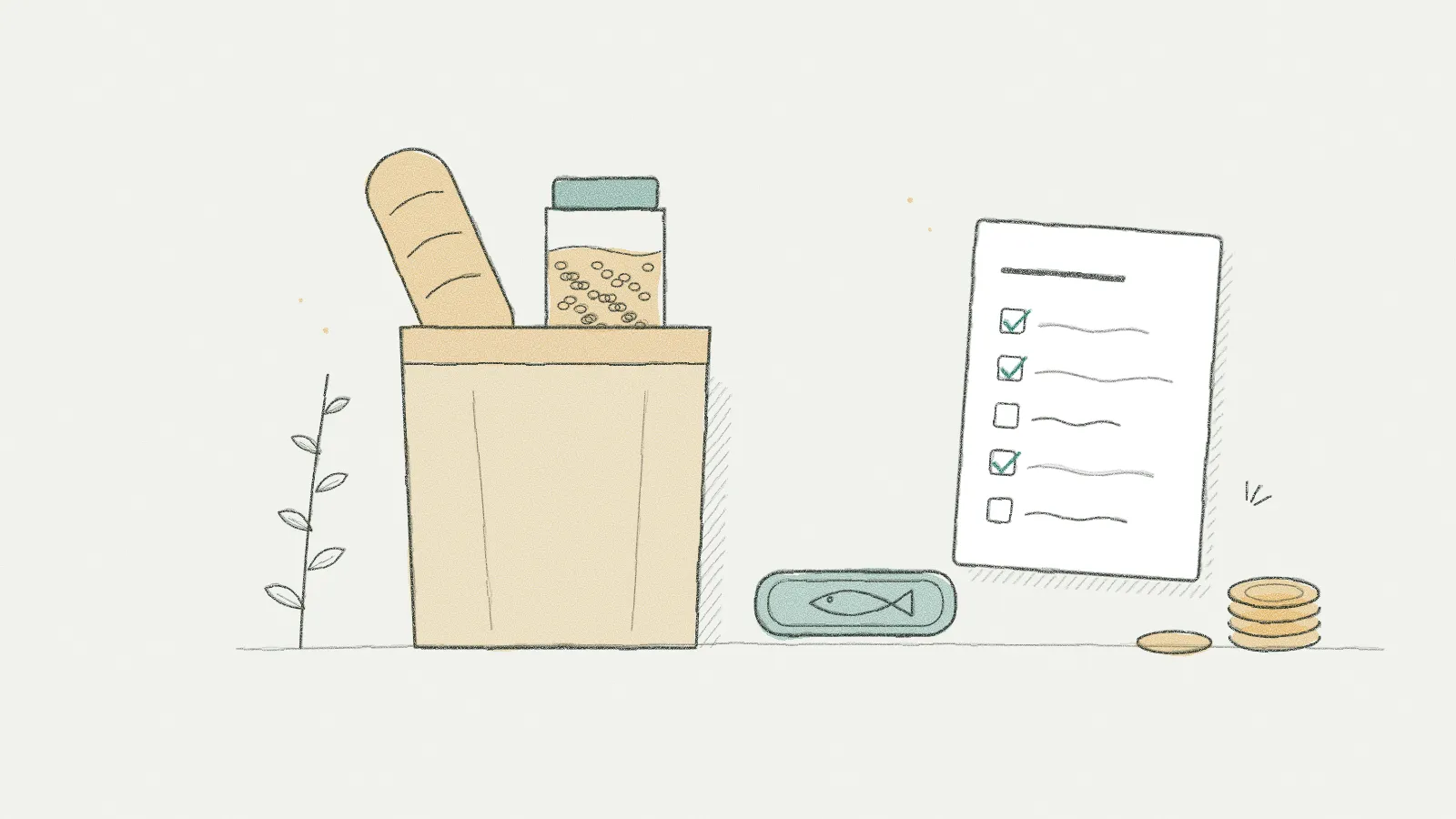
To make a budget meal plan for a family, build the week around beans and lentils, eggs, rice, pasta, potatoes, frozen vegetables and tinned or frozen fish; cook double and plan the leftovers; and shop once, from a list taken from the plan. Often what makes a week expensive isn’t any one dish, but the food bought without a plan that ends up in the bin.
Most advice on eating cheaply starts with cheap recipes and this week’s offers. They help, but a week of cheap recipes stops being cheap when half a bag of spinach wilts in the drawer and Thursday turns into a takeaway. What you need is a few decisions made before you walk into the shop, not in the aisle.
Decide the plan before the shop
First the plan, then the list, then the shop. Before writing anything, open the fridge and the cupboards and start the week from what’s already there: the half bag of rice, the carrots that need using, the tin of chickpeas at the back. Fill the rest with dishes you already know how to cook, and only then write down what’s missing.
The healthy eating recommendations of AESAN, Spain’s food safety agency start in the same place: plan the week’s menus, then shop from a list of what you really need, adjusting the quantities so less ends up in the bin. If planning the week isn’t a habit yet, the routine for planning a weekly menu as a family walks through it step by step.
Put beans and eggs at the centre, and let meat play support
Beans, lentils and chickpeas are the natural backbone of a cheap, balanced week. AESAN recommends them at least four times a week and notes they’re affordable; it calls eggs affordable too, at up to four a week. Chickpeas in a curry or lentils stirred into a pie go further than meat alone.
Meat doesn’t have to disappear, just move to a supporting role: AESAN suggests up to three servings a week, mostly chicken or rabbit. A tray of frozen thighs makes one dinner, a little mince goes further in a cottage pie with lentils mixed in, and an omelette with whatever vegetables are left feeds four from what’s nearly always in the fridge.
Fish and veg: tinned and frozen count too
Fish is the hardest thing to fit into a tight budget, and AESAN recommends it at least three times a week, preferably oily. The good news, from the same guide, is that frozen and tinned fish are about as nutritious as fresh. The NHS counts canned sardines, pilchards and tinned salmon as oily fish, though not tinned tuna.
Vegetables work the same way. AESAN recommends seasonal produce and minimally processed food such as frozen vegetables: in autumn, squash, cabbage and parsnips. A bag of frozen peas doesn’t go limp by Thursday.
Cook once, eat twice
The simplest way to make the week cheaper is to plan the leftovers instead of waiting for them to turn up. A pot of lentil soup for eight takes barely longer than one for four, and the second half is tomorrow’s lunch or a box in the freezer. AESAN suggests cooking pulses in large quantities and freezing them.
- Write them into the plan: if Monday is a double batch of soup, Tuesday’s lunch is done.
- Leave a gap for what’s left: a clear-out-the-fridge dinner at the end of the week means the last vegetables become soup instead of rubbish.
An example cheap weekly meal plan for four
Lunch and dinner, Monday to Sunday, with fish three times (once oily), pulses on six days and meat twice.
| Day | Lunch | Dinner | What keeps it cheap |
|---|---|---|---|
| Monday | Lentil soup (a double batch) | Chicken thigh traybake with potatoes and carrots | Dried lentils; frozen thighs |
| Tuesday | Monday’s lentil soup | Fish fingers, jacket potatoes and peas | Leftovers; frozen fish and peas |
| Wednesday | Tuna and sweetcorn pasta | Three-bean chilli with rice (a double batch) | Store cupboard; tinned beans |
| Thursday | Wednesday’s chilli in wraps | Cheese and vegetable omelette | Leftovers; eggs |
| Friday | Sardines on toast with salad | Homemade pizza | Tinned oily fish; homemade dough |
| Saturday | Improvise with what’s left | Chickpea and spinach curry with rice | Nothing wasted; tinned chickpeas |
| Sunday | Cottage pie with lentils and frozen peas | Soup from the week’s leftover vegetables | Mince stretched; leftovers |
Notice what repeats: two dishes come out of one cook each, and the shopping list is short because much of the week comes from the cupboard. None is a special “budget recipe”: they’re ordinary family meals, in an order that makes each shop go further.
What to leave out
- Recipes with an ingredient you’ll use once. The jar of curry paste that lives in the fridge for six months isn’t cheap.
- Offers that aren’t on the plan. Three-for-two on something you weren’t going to eat is spending, not saving.
- Meals you won’t eat at home. If Saturday lunch is at your parents’, don’t shop for it.
- A plan so strict nobody sticks to it. Friday’s homemade pizza is part of the plan; the 10 p.m. takeaway is what happens when there isn’t one.
Cheap is what gets eaten
A budget meal plan isn’t measured by the price of each recipe, but by how little is left to throw out on Sunday. Deciding the week calmly, around what you already have and the dishes you cook well, is what makes the shop go further: food bought with a meal in mind ends up as a meal.
Doing it with Wenu
Wenu doesn’t know prices, keep a budget or know what’s in your fridge: that part is still yours. What it does is take the legwork out of this routine. Your dish library keeps the cheap dishes you already cook, with their ingredients and category, so filtering by “Legumes” or sorting by “Least recently planned” gets you most of the week. In the calendar, a gap can be marked “Improvise” for the leftovers night or “Eating out” so nobody shops for it. On Free you type the shopping list yourself; with Pro it fills itself with the ingredients of what you plan, and everyone at home sees the same menu and the same list.
Keep reading
Planning7 min read
How to make a grocery list from your meal plan, step by step
Learn to turn your meal plan into a weekly grocery list, dish by dish, sorted by aisle and minus what's already at home. With an example and a checklist.
Read article →
Planning5 min read
What is batch cooking, and how to start cooking for the whole week
Learn what batch cooking is, which dishes are worth cooking in bulk, how long they keep in the fridge, and how to plan your first Sunday session.
Read article →
Planning6 min read
How to plan a weekly menu as a family (and actually stick to it)
Learn to plan a weekly family meal plan in fifteen minutes, with one shop, a balanced week, and a complete example week for a family of four.
Read article →